Picture this. You spot something you really want, maybe a new laptop, a car, or even a dream vacation. Your first instinct might be to swipe a credit card or sign up for a payment plan. It feels like the easy move.
But a few months later, you’re still paying it off with interest stacking up, and the excitement of that purchase is long gone.
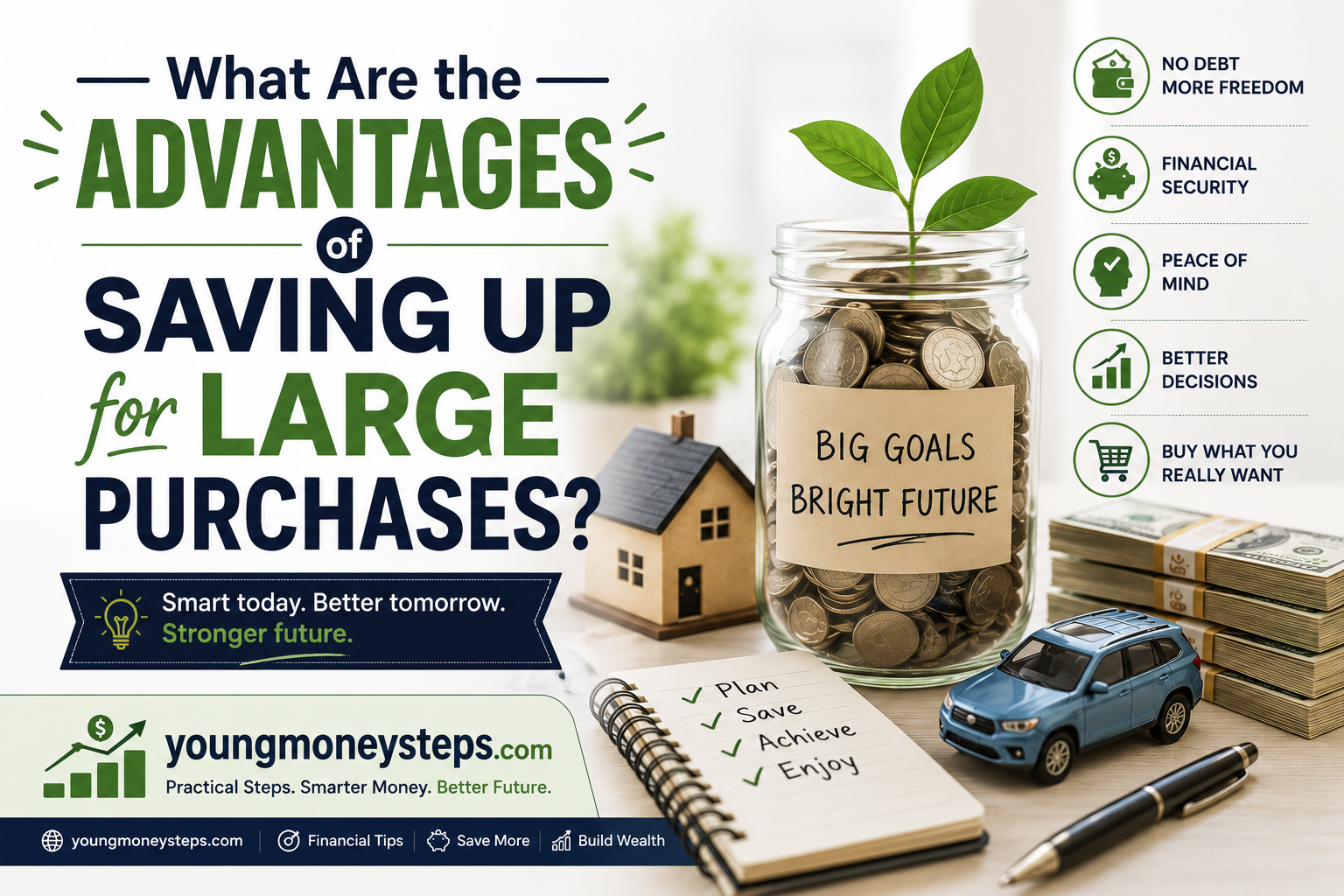
There is a better way, and it is one that most people overlook because it requires a little patience. Saving up for large purchases before you make them is one of the smartest financial habits you can build. It sounds simple, almost old-fashioned, but the benefits go far beyond just avoiding debt.
In this article, we are breaking down exactly what the advantages of saving up for large purchases are, why it matters more than most people realize, and how you can start doing it in a way that actually feels manageable.
Why Saving Before You Spend Changes Everything?
Most of us have been conditioned to think that “buy now, pay later” is just the normal way to handle big expenses. But that mindset keeps a lot of people stuck in a cycle where they are always catching up financially instead of getting ahead.
When you save up first, you flip that script entirely. You make a purchase with money you already have, walk away with zero new debt, and keep your monthly cash flow completely intact. That shift in how you handle money has a ripple effect on your entire financial life.
You Actually Own What You Buy
This one sounds obvious, but it is worth thinking about. When you pay cash for something, it is yours from day one. No lender has a claim on it. No missed payment can take it away. Whether it is a car, a piece of furniture, or a new phone, the feeling of truly owning something outright is different from the feeling of making payments on it.
You Stop Living Paycheck to Paycheck
One of the biggest advantages of saving up for large purchases is that it forces you to build a buffer in your finances. Every time you save toward something instead of putting it on credit, you are strengthening your financial foundation. Over time, that habit turns into a cushion that keeps you from scrambling every time a big expense comes up.
ALSO READ: Government Shutdown and Student Loans 2026
The Real Financial Advantages of Saving Up for Large Purchases
Let’s get into the specifics. These are the concrete, tangible benefits you get when you choose to save first and spend later.
1. You Pay Zero Interest
This is the biggest one. Interest is essentially a fee you pay for the privilege of spending money you do not have yet. On a credit card with a 20% APR, a $2,000 purchase can end up costing you $400 or more in interest if you take a year to pay it off.
When you save up and pay in cash, that extra $400 stays in your pocket. Multiply that across several large purchases over your lifetime, and you are talking about thousands of dollars saved just by being patient and planning ahead.
2. You Have Real Negotiating Power
Cash buyers have leverage. Whether you are buying a car at a dealership, negotiating with a contractor, or purchasing furniture, sellers often prefer cash transactions because they are guaranteed and immediate. Many sellers are willing to offer a discount for cash payment.
This is one of the most underrated advantages of saving up for large purchases. You walk in with cash, and suddenly you have options that financed buyers simply do not have.
3. Your Credit Score Stays Healthier
Every time you open a new credit account or carry a high balance, it can negatively affect your credit score. Your credit utilization ratio, which is how much of your available credit you are using, is one of the biggest factors in your score.
Saving up for large purchases means you are not maxing out credit cards or taking on new loans. Your credit utilization stays low, your score stays strong, and you are in a better position for the things where credit actually matters, like getting a mortgage with a good interest rate.
4. You Avoid Buyer’s Remorse
Here is something interesting. When you save up for something over a period of weeks or months, you naturally spend more time thinking about whether you actually want it. That waiting period acts as a built-in filter for impulse purchases.
By the time you have saved enough to buy that item, you either feel genuinely confident it is the right purchase or you have changed your mind and kept your money. Either way, you win. You end up spending on things you truly value rather than things that just seemed exciting in the moment.
5. Your Monthly Budget Stays Clean
When you finance large purchases, you add fixed monthly payments to your budget. Those payments stick around for months or years and eat into the money you could be using for other goals.
Saving up and paying in full means your monthly expenses do not increase. Your budget stays predictable, which makes it so much easier to plan for other financial goals at the same time.
How Saving Up Builds Better Money Habits Overall?
The advantages of saving up for large purchases go beyond any single transaction. The practice of saving toward a goal reshapes how you think about money in general.
1. It Teaches You to Delay Gratification
Delayed gratification is one of the most powerful financial skills you can develop. Research consistently shows that people who are able to wait for rewards tend to make better financial decisions overall. Saving up for a large purchase is basically a training ground for this skill.
Every week you contribute to your savings goal and resist the urge to buy immediately, you are strengthening your ability to prioritize long-term rewards over short-term impulses. That mindset carries over into every area of your financial life.
2. It Makes You More Intentional with Money
When you are saving toward something specific, every spending decision feels more deliberate. You start asking yourself whether a smaller purchase is worth slowing down progress toward your bigger goal. That awareness is incredibly valuable and hard to develop any other way.
3. It Builds Confidence in Your Financial Decisions
There is a real sense of accomplishment that comes from saving up and buying something outright. You set a goal, you worked toward it, and you achieved it on your own terms. That confidence builds momentum and makes your next savings goal feel more achievable.

Practical Tips to Start Saving for Large Purchases
Knowing the advantages is great. Actually doing it is where most people get stuck. Here are some straightforward ways to make saving for large purchases a realistic part of your financial routine.
1. Create a Dedicated Savings Fund
Instead of keeping all your money in one account, open a separate savings account specifically for large purchases. Label it something like “Big Purchases Fund” or name it after your specific goal. Having it separate makes it less tempting to dip into and easier to track.
2. Break Your Goal Into Monthly Targets
Take the total amount you need and divide it by the number of months you have to save. If you want to buy a $1,200 laptop in six months, that is $200 per month. Seeing it broken down that way makes the goal feel achievable instead of overwhelming.
3. Automate Your Savings
Set up an automatic transfer to your savings fund on the day you get paid. Even if it is a small amount to start, automating it means it happens consistently without you having to remember or make a decision every month. Over time, you can increase the amount as your income grows or your expenses shift.
4. Prioritize by Need and Timeline
Not every large purchase needs to be saved for at the same time. Figure out what you need most urgently and when you realistically need it. Then rank your goals and focus your saving energy on the most important one first before moving to the next.
ALSO READ: Credit Union High Yield Savings Accounts (2026)
When Is It Okay to Finance Instead of Save?
To be fair, there are situations where financing a purchase makes sense. If you are buying a home, most people cannot save the entire purchase price, and a mortgage is a practical tool. The same applies to a reliable car that you need for work and cannot wait six months to save for.
The key is to be intentional about it. Finance when you genuinely have to and the terms are favorable. Save whenever time allows, because the financial advantages of saving up for large purchases almost always outweigh the convenience of borrowing.
Final Thoughts
The advantages of saving up for large purchases are not just financial. Yes, you avoid interest, keep your budget clean, and maintain a healthy credit score. But beyond the numbers, saving first gives you a sense of control over your money that financing never can.
You make purchases on your terms, with your money, at a time you choose. That is a powerful position to be in, and it is one that anyone can reach with a little planning and patience.
Start small. Pick one upcoming large purchase and commit to saving for it instead of putting it on credit. You will be surprised how much better it feels to pay for something you already own.