
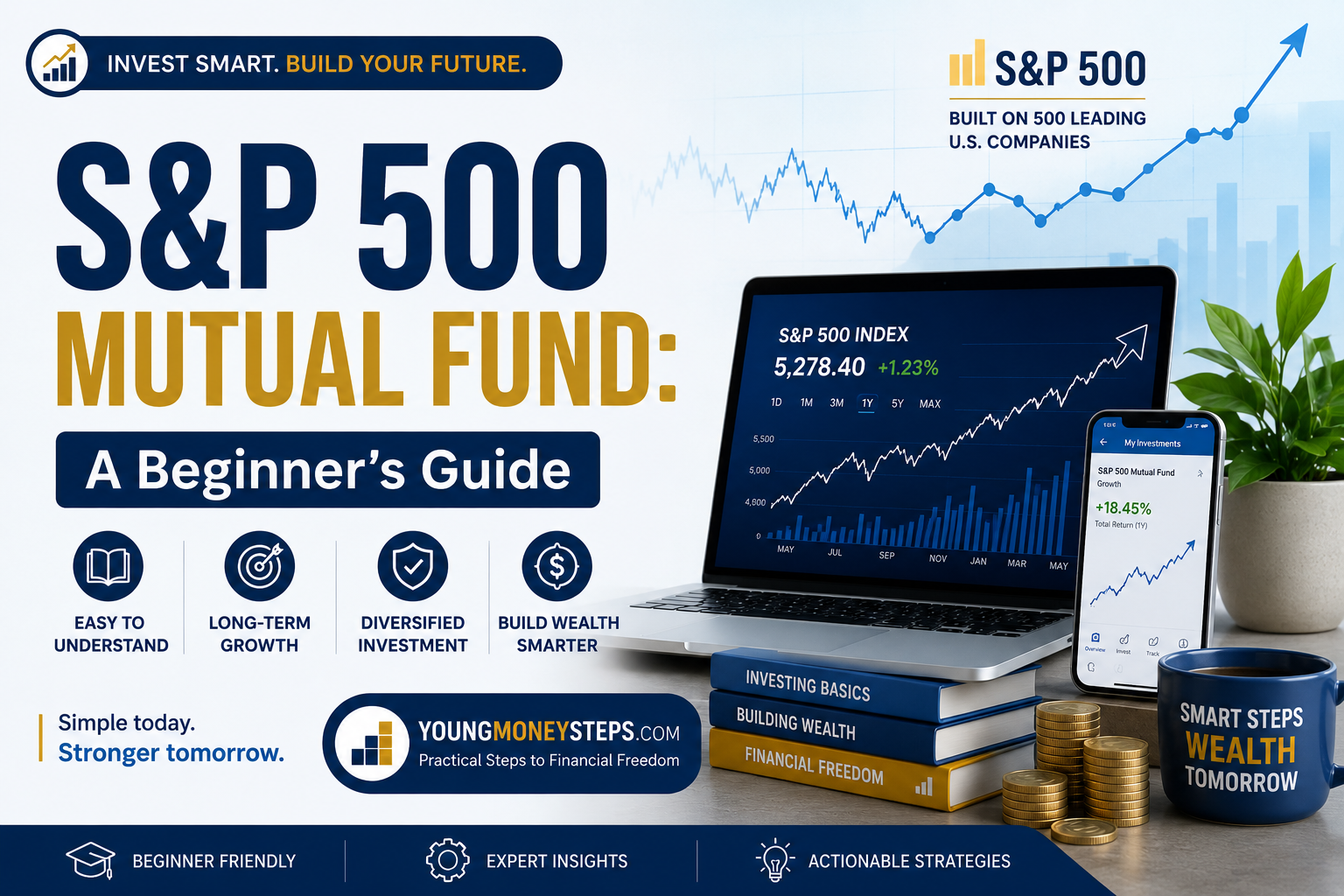
If you have ever heard someone say “just invest in the S&P 500” and nodded along without fully knowing what that means, you are not alone. It is one of the most repeated pieces of investing advice out there, and for good reason.
But before you put a single dollar anywhere, it helps to actually understand what an S&P 500 mutual fund is, how it works, and why so many people swear by it.
This guide breaks it all down in a way that actually makes sense, whether you are brand new to investing or just looking to fill in some gaps in your knowledge.
What Is the S&P 500?
Before we talk about the fund itself, let us talk about the index it tracks.
The S&P 500 stands for the Standard and Poor’s 500. It is a list of 500 of the largest publicly traded companies in the United States, selected by a committee at S&P Global based on factors like market size, liquidity, and financial health. Think of it as a report card for the overall U.S. stock market.
Companies like Apple, Microsoft, Amazon, JPMorgan Chase, and Johnson and Johnson are all part of the S&P 500. Together, these 500 companies represent roughly 80% of the total value of the U.S. stock market. So when people say the market went up or down today, they are usually talking about the S&P 500.
How Companies Get Into the S&P 500?
Not every big company automatically makes the list. To be included, a company generally needs to be headquartered in the U.S., have a market capitalization of at least $14.5 billion, be financially profitable over a recent period, and have its shares available to the public.
The committee reviews the index regularly and swaps out companies that no longer qualify. This means the S&P 500 is always made up of companies that are currently strong and relevant.
ALSO READ: What Are the Advantages of Saving Up for Large Purchases?
What Is an S&P 500 Mutual Fund?
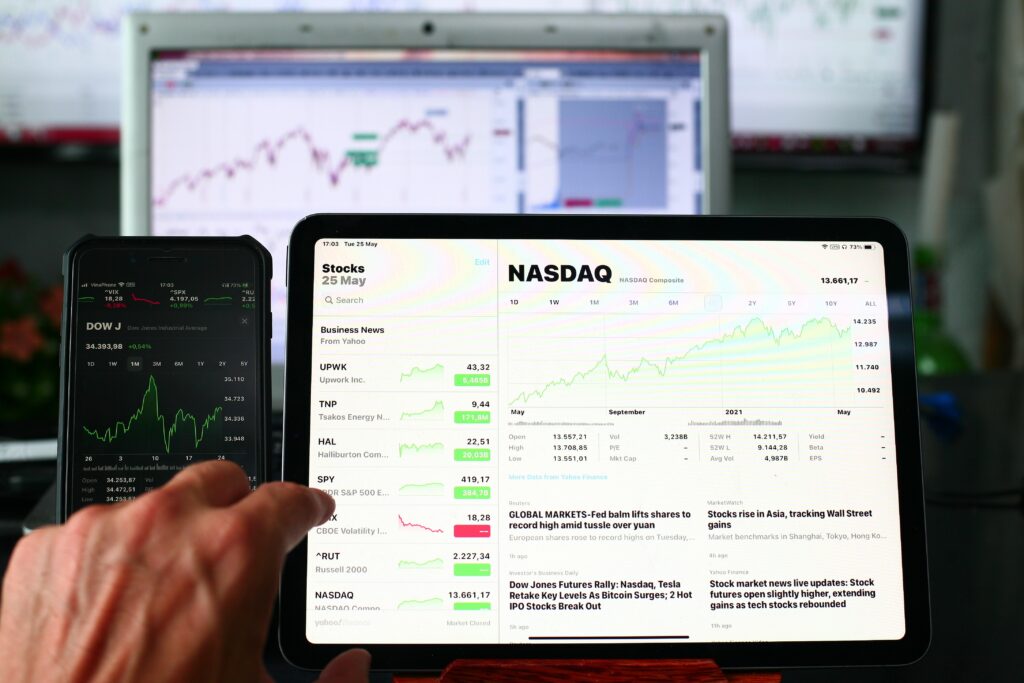
An S&P 500 mutual fund is a fund that pools money from many investors and uses it to buy shares in all 500 companies that make up the S&P 500 index, in the same proportions as the index itself.
The goal is not to beat the market. The goal is to match it. When the S&P 500 rises by 10%, your fund rises by roughly 10%. When it falls, your fund falls by a similar amount. You are essentially buying a small slice of the entire U.S. large-cap stock market in a single investment.
This type of fund is what is known as a passively managed fund, or an index fund. There is no team of analysts making daily decisions about which stocks to buy or sell. The fund simply mirrors the index, which keeps costs low and decision making simple.
S&P 500 Mutual Fund vs S&P 500 ETF
You will often hear these two terms used almost interchangeably, and while they track the same index, there is a small but important difference. A mutual fund is priced once at the end of each trading day, and you buy or sell at that end-of-day price. An ETF trades throughout the day on the stock exchange just like an individual stock, so its price fluctuates during market hours.
For long-term investors, this difference rarely matters. Both give you the same exposure to the S&P 500. The choice often comes down to which platform you use and your personal preference.
How Does an S&P 500 Mutual Fund Actually Work?
Here is the behind-the-scenes look at what happens when you invest in one of these funds.
1. Pooling Your Money With Other Investors
When you put $500 into an S&P 500 mutual fund, your money gets combined with contributions from thousands of other investors. The fund then uses that collective pool of money to buy shares in all 500 companies in the index. You own a proportional share of the entire fund based on how much you put in.
2. Weighting by Market Cap
The S&P 500 is not an equal split across 500 companies. It is weighted by market capitalization, meaning larger companies make up a bigger percentage of the index. Apple and Microsoft, for example, each represent a much larger share of the index than a mid-sized company near the bottom of the list.
This means when you invest in an S&P 500 mutual fund, you are not putting an equal amount into each of those 500 companies. You are putting more into the largest ones and less into the smaller ones. The fund automatically maintains these proportions.
3. Automatic Rebalancing
One of the most underrated benefits of an S&P 500 mutual fund is that it handles rebalancing for you. When companies grow in value, their weight in the index increases. When they shrink or get removed from the index, the fund adjusts accordingly. You do not have to do anything. The fund manager handles all of that behind the scenes.
4. Dividends
Many of the companies in the S&P 500 pay dividends to their shareholders. When those companies pay out dividends, the mutual fund collects them and typically passes them along to you. You can either take those dividends as cash or reinvest them automatically back into the fund to buy more shares. Reinvesting dividends is one of the most powerful ways to grow your investment over time.
Why So Many Investors Choose S&P 500 Mutual Funds?
There are a lot of investment options out there. So what makes the S&P 500 mutual fund stand out, especially for beginners?
1. The Historical Returns Make a Strong Case
Over the long run, the S&P 500 has delivered an average annual return of roughly 10% before inflation, or around 7% after accounting for inflation. That is not a guarantee of future performance, but it is a track record that spans decades and includes multiple recessions, market crashes, and economic recoveries.
Very few investment strategies have matched that performance consistently over time. And most actively managed funds, which charge higher fees and have professional managers making decisions, still fail to beat the S&P 500 over the long run.
2. Instant Diversification
Buying into one S&P 500 mutual fund means you instantly own a tiny piece of 500 different companies across many industries including technology, healthcare, finance, consumer goods, energy, and more. That kind of diversification significantly reduces your risk compared to putting all your money into just a few stocks.
If one company in the index has a terrible year, it barely moves the needle on your overall investment. Your money is spread wide enough that no single company can sink you.
3. Low Fees Mean More Money Stays With You
Because S&P 500 mutual funds are passively managed, their costs are extremely low. The expense ratios on popular S&P 500 index mutual funds from providers like Vanguard, Fidelity, and Schwab can be as low as 0.02% to 0.03% per year. On a $10,000 investment, that is just $2 to $3 per year in fees.
Compare that to an actively managed mutual fund that might charge 1% or more annually, and the difference in fees alone can translate into tens of thousands of dollars over a 30-year investing period.
What Are the Risks of Investing in an S&P 500 Mutual Fund?
No investment is without risk, and it would not be honest to skip over this part.
i. Market Risk Is Real
When the overall stock market drops, your S&P 500 mutual fund drops with it. During the 2008 financial crisis, the S&P 500 lost roughly 50% of its value. During the early days of the COVID pandemic in 2020, it dropped about 34% in a matter of weeks. These kinds of drops can be scary to watch, especially when it is your money on the line.
The important thing to understand is that the market has always recovered from these downturns historically. But recovery takes time, and if you need your money in the short term, a big market drop could hurt you.
ii. It Only Covers U.S. Large Cap Stocks
The S&P 500 is a fantastic foundation, but it is not the whole world. It only includes large American companies. You get no exposure to international markets, small U.S. companies, or bonds through this fund alone. Many financial advisors suggest pairing an S&P 500 fund with a total international index fund to get broader global exposure.
iii. Concentration in a Few Big Names
Because the S&P 500 is weighted by market cap, a handful of the very largest companies make up a surprisingly large portion of the index. The top 10 companies can represent 30% or more of the entire fund. That means your returns are heavily influenced by just a small number of mega-cap tech companies, which introduces a degree of concentration risk.

How to Invest in an S&P 500 Mutual Fund?
Getting started is more straightforward than most people expect.
Step 1: Open a Brokerage or Retirement Account
You can invest in an S&P 500 mutual fund through a brokerage account, a Roth IRA, a traditional IRA, or a 401(k) if your employer offers one. For most beginners, starting with a Roth IRA is a smart move because your money grows completely tax-free and withdrawals in retirement are also tax-free.
Step 2: Choose Your Fund
Some of the most popular and widely trusted S&P 500 mutual funds include the Vanguard 500 Index Fund (VFIAX), the Fidelity 500 Index Fund (FXAIX), and the Schwab S&P 500 Index Fund (SWPPX). All three have extremely low expense ratios and have consistently tracked the S&P 500 with minimal deviation.
Step 3: Decide How Much to Invest
Many of these funds have low or no minimum investment requirements, especially within a retirement account. You can start with as little as $1 with some providers. The key is not how much you start with. The key is that you start and then keep adding money consistently over time.
Step 4: Set Up Automatic Contributions
The single most effective habit for building long-term wealth is automating your investments. Set up a recurring monthly contribution, even if it is a small amount, and let it run on autopilot. This strategy, known as dollar cost averaging, means you buy more shares when prices are low and fewer when prices are high, which smooths out your average cost over time.
ALSO READ: GoMyFinance.com Saving Money: Guide to Finally Building Real Savings
Final Thoughts: Is an S&P 500 Mutual Fund Right for You?
For most people who are starting their investing journey and thinking long term, an S&P 500 mutual fund is one of the most reliable, low-cost, and straightforward ways to build wealth. You get broad diversification, a strong historical track record, minimal fees, and almost zero maintenance required on your end.
It is not flashy. It will not make you rich overnight. But for the average person saving for retirement, a home, or financial freedom, it is exactly the kind of boring, dependable investment that actually works over time.
Start small if you need to. The most important step is simply getting started and letting compound growth do the work for you year after year.