
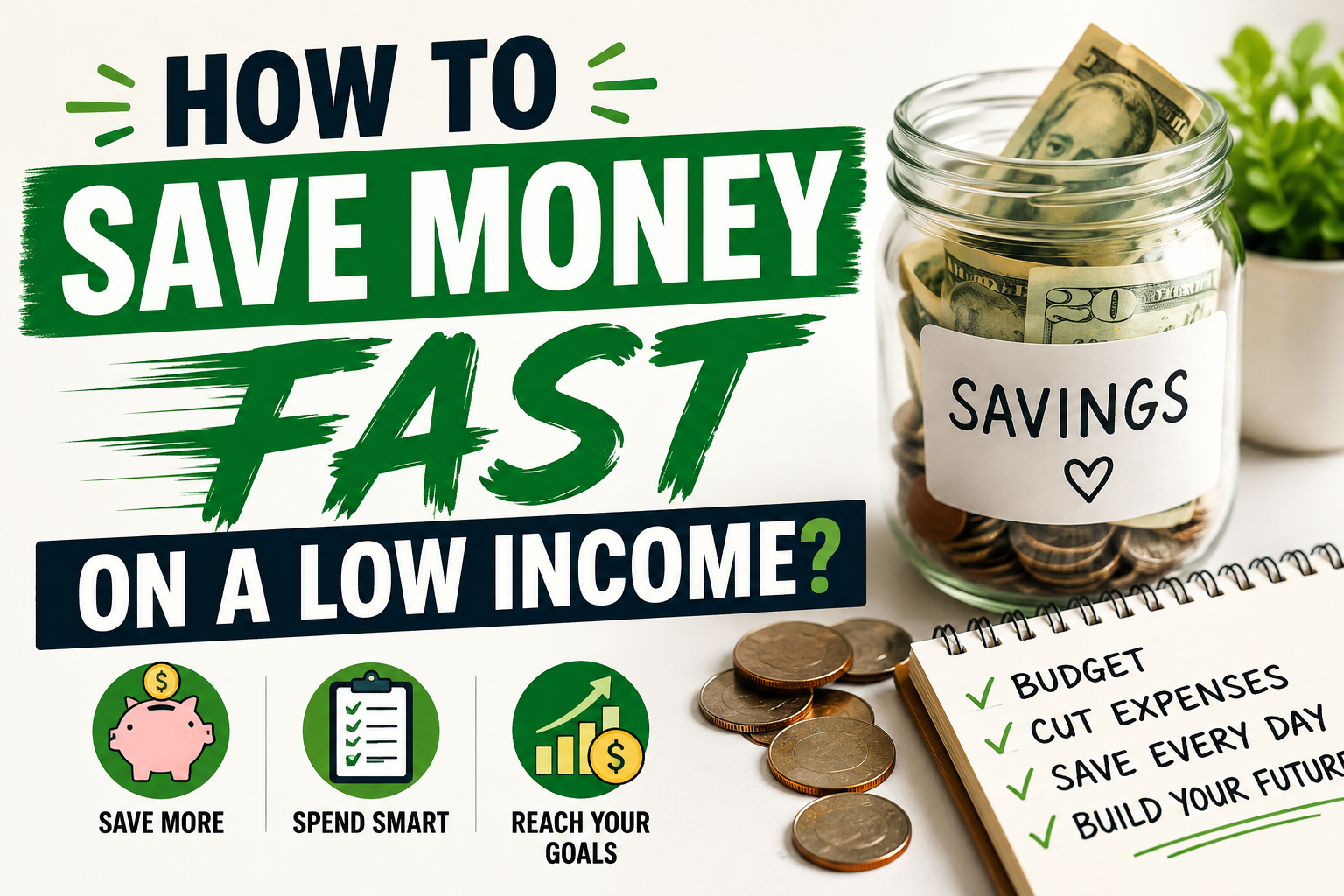
Let’s be honest. When you’re living paycheck to paycheck, the phrase “save money” can feel like a bad joke. You’re already cutting corners, skipping meals out, and watching every dollar. So where exactly is this money supposed to come from?
Here’s the truth: saving money on a low income is hard, but it is absolutely possible. It doesn’t require some secret strategy or a lucky break. It requires small, consistent habits that quietly add up over time.
And this article is going to walk you through exactly how to do that in a way that actually works in real life.
Whether you’re earning minimum wage, working part-time, or just going through a tough financial season, these tips are built for your situation.
Start With What You Actually Spend (Not What You Think You Spend)
Most people have a rough idea of their income but almost no idea where their money actually goes. Before you can save anything, you need to know the full picture.
Grab your last 30 days of bank or card statements and go through every single transaction. Categorize them into groups like rent, food, transportation, subscriptions, and everything else. The number that usually shocks people is how much they spend on small, forgettable purchases.
A $4 coffee here, a $9 app there, and suddenly $80 is gone with nothing to show for it.
Build a Zero-Based Budget
A zero-based budget means every dollar of your income gets assigned a job. After paying bills, groceries, and necessities, you tell the leftover money exactly where to go instead of letting it disappear. Even if you only have $20 left over at the end of the month, give that $20 a purpose. That’s how the saving habit starts.
Free apps like Mint, YNAB (You Need A Budget), or even a simple Google Sheet can help you track this without any financial expertise.
READ MORE: Mutual Fund vs Index Fund: Which Is Better for Beginners in 2026?

Cut Your Biggest Expenses First
When people think about saving money, they go straight to “stop buying coffee.” But skipping your daily coffee saves you maybe $100 a month at best. The real money is hiding in your big three: housing, food, and transportation.
These three categories usually eat up 70 to 80 percent of a low income budget.
1. Housing: Explore Every Option
Rent is often the single largest expense in any budget. If you’re spending more than 30 percent of your take-home pay on housing, that’s a problem worth solving aggressively. Options worth exploring include getting a roommate, moving to a cheaper part of town, negotiating your lease renewal, or looking into local housing assistance programs. Even saving $100 a month on rent adds up to $1,200 a year.
2. Food: Cook More, Spend Less
Food is one of the most flexible areas in any budget. Cooking at home instead of eating out can save the average person $200 to $400 per month. You don’t have to become a gourmet chef either. Simple, affordable meals built around staples like rice, beans, eggs, oats, and frozen vegetables are nutritious and extremely cheap.
Meal planning once a week before you grocery shop is a total game changer. You buy only what you need, waste less food, and avoid those expensive “I have nothing to eat” takeout orders.
Also, try shopping at discount grocery stores like Aldi, Lidl, or local ethnic supermarkets. Brand loyalty can be expensive. Generic or store-brand products are usually just as good and cost significantly less.
3. Transportation: Rethink How You Get Around
If you own a car, you’re probably spending more than you realize when you add up insurance, gas, maintenance, and parking. If public transit, biking, or carpooling is an option in your area, running the numbers might surprise you.
Even reducing one car trip per week or shopping around for cheaper car insurance can free up meaningful cash.
Cancel the Subscriptions You’ve Forgotten About
Subscription creep is real. Most people are paying for services they barely use or have completely forgotten about. Streaming platforms, fitness apps, cloud storage, news sites, and software trials that auto-renewed all quietly drain your account every month.
Go through your bank statement and highlight every recurring charge. Then ask yourself honestly: did I use this in the last 30 days? If the answer is no, cancel it.
You can always resubscribe later. Tools like Rocket Money or Trim can help you find and cancel forgotten subscriptions automatically.
Use the “Save First” Method Even With Small Amounts
Most people try to save whatever is left at the end of the month. The problem is that most months, nothing is left. The save first method flips that entirely.
When your paycheck hits, immediately move a small amount to savings before you spend anything. Even if it’s $10 or $25, do it automatically so you never see it in your spending account. Most banks let you set up automatic transfers. Once it’s out of sight, you adjust your spending to what remains.
This sounds almost too simple, but it works because it removes willpower from the equation. You’re not deciding each month whether to save. It just happens.
Take Advantage of Free Resources and Programs
One of the most overlooked strategies for low-income households is simply using the free and reduced-cost programs that already exist.
Many people leave hundreds or even thousands of dollars on the table each year simply because they don’t know these programs exist.
1. Government and Community Assistance
Depending on your income level, you may qualify for programs like SNAP (food assistance), Medicaid, the Low Income Home Energy Assistance Program (LIHEAP), or WIC if you have children. There is no shame in using programs you qualify for and pay taxes to support. These programs exist specifically for people in your situation.
2. Free Entertainment and Education
Your local library card is one of the most underrated financial tools out there. Beyond free books, most libraries offer free movies, music, e-books, audiobooks, and even online courses through platforms like Libby and Kanopy. Some libraries also offer free access to software, museum passes, and notary services.
For entertainment, replace paid activities with free or nearly free alternatives. Community events, free park days, potlucks with friends, and free museum days can be just as enjoyable as the expensive versions.
Reduce Utility Bills Without Sacrificing Comfort
Small changes in how you use energy at home can add up to noticeable savings over the course of a year. Here are some adjustments that cost nothing to make:
- Turn off lights and unplug electronics you’re not using
- Lower your thermostat by a few degrees in winter and raise it slightly in summer
- Wash clothes in cold water and air dry when possible
- Take shorter showers to reduce water heating costs
- Call your utility providers and ask about low-income discount programs or budget billing
That last one is worth repeating. Many utility companies have programs specifically for low-income customers that can reduce your bill by 10 to 30 percent.
You just have to ask.
Build a Small Emergency Fund Before Anything Else
When you’re living on a tight budget, one surprise expense can undo months of careful saving. A car repair, a medical bill, or a broken appliance can wipe you out and push you into debt.
That’s why even a small emergency fund is one of the most powerful financial tools you can have.
Your goal doesn’t need to be three to six months of expenses right away. Start with $500. Then $1,000. Having even that much set aside means a bad day doesn’t turn into a financial disaster. Keep it in a separate savings account so it’s not mixed with your spending money.
Find Ways to Increase Your Income on the Side
Cutting expenses can only take you so far. At some point, the most powerful thing you can do for your finances is earn a little more. You don’t need a second job or a business to make this work. Even an extra $100 or $200 a month makes a real difference when you’re on a tight income.
Some ideas that require little or no upfront investment: selling things you no longer need on Facebook Marketplace or eBay, offering services like lawn care, cleaning, or babysitting to neighbors, doing delivery or rideshare work on your own schedule, or freelancing skills you already have like writing, graphic design, or data entry.
Every extra dollar you earn that goes straight to savings is a dollar that’s building your future.
READ MORE: S&P 500 Mutual Fund: What It Is and How It Works?
Final Thoughts: Small Steps Still Move You Forward
Saving money on a low income is not about being perfect. It’s not about cutting every joy out of your life or stressing over every single dollar. It’s about building small, consistent habits that slowly improve your financial situation over time.
You don’t have to do everything on this list at once. Pick two or three things that feel realistic right now and start there. Track your spending, cancel one subscription, cook at home three more nights a week, and move $20 to savings on payday. Those small steps matter more than you think.
The people who successfully build financial stability on low incomes are not lucky. They’re just consistent. And you can be too.