
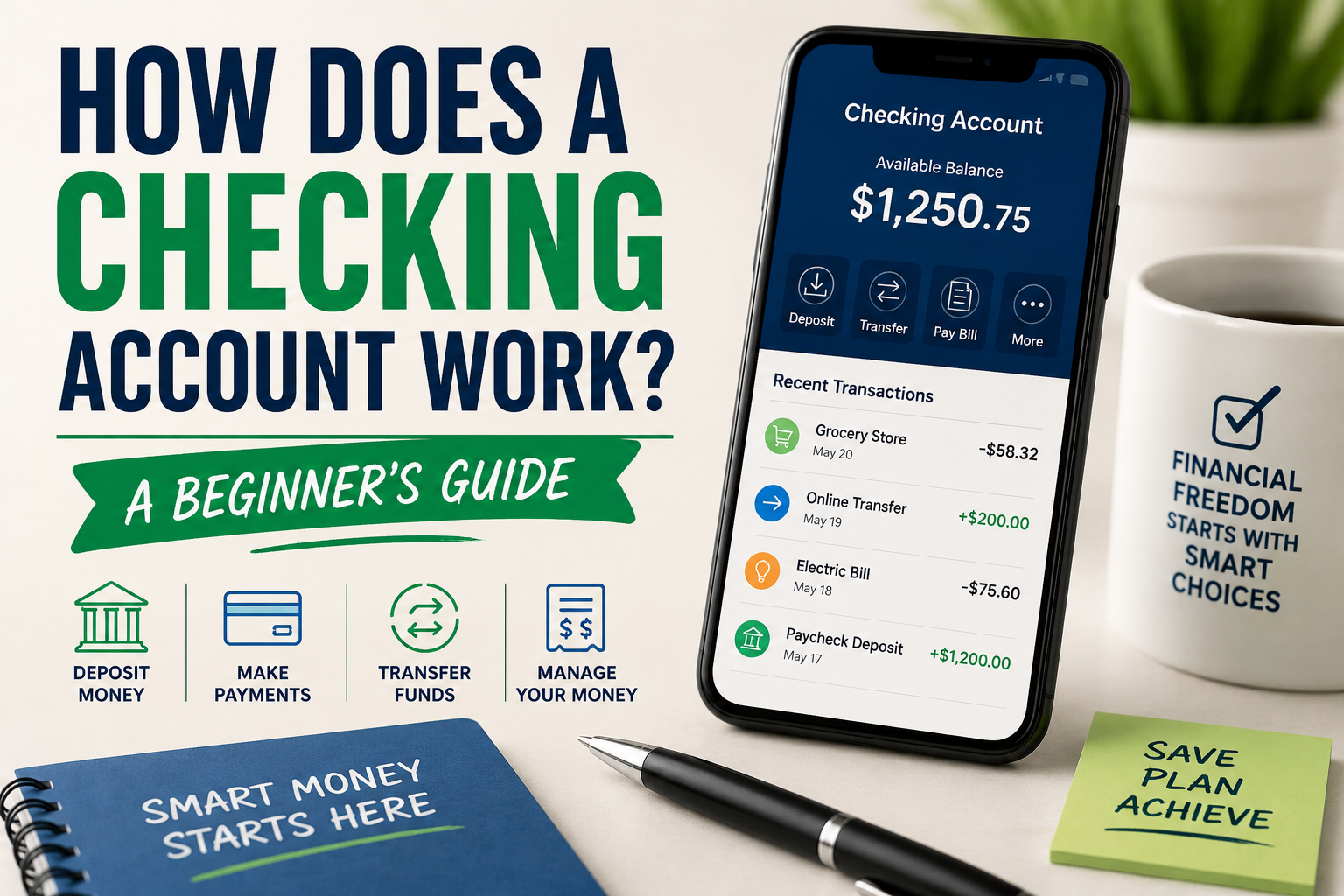
If you are new to banking, a checking account is probably the first thing you will open. It is the most basic and most used type of bank account. But many people never fully understand how it works.
That is what this guide is for. By the end, you will know exactly what a checking account is, how it works, and how to use it wisely.
What Is a Checking Account?
A checking account is a bank account for everyday money. You put money in. You spend money out. It is that simple.
It is different from a savings account. A savings account is for storing money long term. A checking account is for daily use. Think of it as your spending account.
You can use it to pay bills. You can use it to buy groceries. You can also use it to receive your salary.
ALSO READ: Improve Credit Score: Is a 900 Credit Score Possible?
How Does a Checking Account Work?
When you open a checking account, the bank holds your money safely. You can access that money anytime. There are no limits on how many times you can withdraw or spend.
Here is the basic flow:
You deposit money into the account. The bank stores it. You spend from it using a debit card, checks, or online transfers. The bank records every transaction.
It is a constant cycle of money coming in and going out.
1. Deposits
A deposit is when you add money to your account. There are several ways to do this.
You can deposit cash at a bank branch or ATM. You can also receive a direct deposit from your employer. Many people get their paycheck sent directly to their checking account.
You can also transfer money from another account. This is fast and easy through mobile banking apps.
2. Withdrawals
A withdrawal is when you take money out. Again, there are several ways.
You can withdraw cash at an ATM. You can also swipe your debit card at a store. Online bill payments are another form of withdrawal.
Every withdrawal reduces your account balance. This is why it is important to track your spending.
3. Your Account Balance
Your balance is the amount of money currently in your account. It updates every time you make a transaction.
Always know your balance before spending. If you spend more than what is in your account, you go into overdraft. This can lead to fees.
Most banks offer a mobile app. Use it to check your balance daily. It takes less than a minute and keeps you in control.
What Comes With a Checking Account?
When you open a checking account, the bank gives you a few tools to access your money.
1. Debit Card
A debit card is the most common tool. It looks just like a credit card. But there is a key difference.
When you use a debit card, money is taken directly from your account. There is no borrowing involved. You can only spend what you have.
You can use it at stores, restaurants, online shops, and ATMs.
2. Checkbook
Some banks still offer checkbooks. A check is a written order telling your bank to pay someone a specific amount.
Checks are less common today. But they are still used for things like rent payments and business transactions.
When you write a check, the money is not taken out immediately. It is taken out when the recipient deposits or cashes the check.
3. Online and Mobile Banking
Almost every bank today offers online banking. You can log in from your computer or phone to manage your account.
With online banking you can check your balance, transfer money, pay bills, view transaction history, and set up alerts.
Mobile banking apps make this even easier. You can even deposit checks by taking a photo with your phone. This is called mobile check deposit.
4. Direct Deposit
Direct deposit means your employer sends your paycheck straight to your bank account. No paper check. No trip to the bank.
The money usually arrives on your payday. Sometimes it arrives a day early depending on your bank.
Most employers ask for your bank account number and routing number to set this up.
Checking Account Fees to Know About
Banks are not always free. Some checking accounts come with fees. It is important to understand them before you sign up.
1. Monthly Maintenance Fee
Some banks charge a monthly fee just for having the account open. This can range from a few dollars to around $15 per month.
Many banks waive this fee if you meet certain conditions. For example, keeping a minimum balance or setting up direct deposit.
Look for accounts with no monthly fees. Many online banks offer completely free checking accounts.
2. Overdraft Fee
This happens when you spend more than your account balance. The bank may still allow the transaction to go through. But they will charge you a fee.
Overdraft fees can be $25 to $35 per transaction. They add up fast.
To avoid this, always track your spending. You can also opt out of overdraft protection. This means the transaction will simply be declined instead of going through.
2. ATM Fees
Using an ATM outside of your bank’s network can cost you money. You may be charged by both the ATM operator and your own bank.
Stick to your bank’s ATMs when possible. Or choose a bank that reimburses ATM fees.
3. Minimum Balance Fee
Some accounts require you to keep a minimum amount in your account at all times. If your balance drops below that amount, you get charged a fee.
Always read the fine print when opening a checking account.
How to Open a Checking Account?
Opening a checking account is simple. Most banks let you do it online in under 10 minutes.
Here is what you usually need:
- A government-issued ID (passport or national ID)
- Your Social Security Number or Tax ID (in the US)
- A home address
- An initial deposit (some banks require a small amount to open)
Once your account is open, you will receive your debit card in the mail within a few days.
Checking Account vs Savings Account
People often confuse these two. Here is a simple comparison.
A checking account is for everyday spending. A savings account is for building your savings over time.
Savings accounts usually earn interest. Checking accounts typically earn little to no interest.
Savings accounts may limit how many withdrawals you can make per month. Checking accounts have no such limit.
The smart move is to have both. Use your checking account for daily expenses. Move extra money into your savings account to grow it.
Tips for Using Your Checking Account Wisely
Having a checking account is one thing. Using it well is another. Here are some practical tips.
1. Track Every Transaction
Do not wait for your bank statement to see what you spent. Check your account regularly. Even a quick daily glance helps you stay on top of your finances.
2. Set Up Alerts
Most banks let you set up text or email alerts. You can get notified when your balance drops below a certain amount. You can also get alerts for large transactions.
This keeps you informed and helps prevent fraud.
3. Avoid Overdrafts
Overdraft fees are one of the most common money mistakes. Keep a small buffer in your account. For example, treat $100 as your zero. Do not spend below that amount.
4. Use Direct Deposit
Set up direct deposit with your employer. It is faster, safer, and more convenient than paper checks. Some banks even offer small bonuses for setting it up.
5. Review Your Statement Monthly
At the end of each month, go through your full bank statement. Look for any charges you do not recognize. Report anything suspicious to your bank right away.
This habit also helps you spot wasteful spending.
Is a Checking Account Safe?
Yes. In the United States, checking accounts at FDIC-insured banks are protected up to $250,000. This means if the bank fails, your money is still safe.
In other countries, similar protections exist under different names. Always make sure your bank is government insured before opening an account.
ALSO READ: Improve Credit Score: Is a 900 Credit Score Possible?
Final Thoughts
A checking account is one of the most important financial tools you will ever use. It keeps your money safe, accessible, and organized.
Understanding how it works puts you in control. You know when money comes in. You know when it goes out. And you know what fees to avoid.
Start with the basics. Open an account, set up direct deposit, track your spending, and avoid overdrafts.
Once you master your checking account, everything else in personal finance becomes easier.