
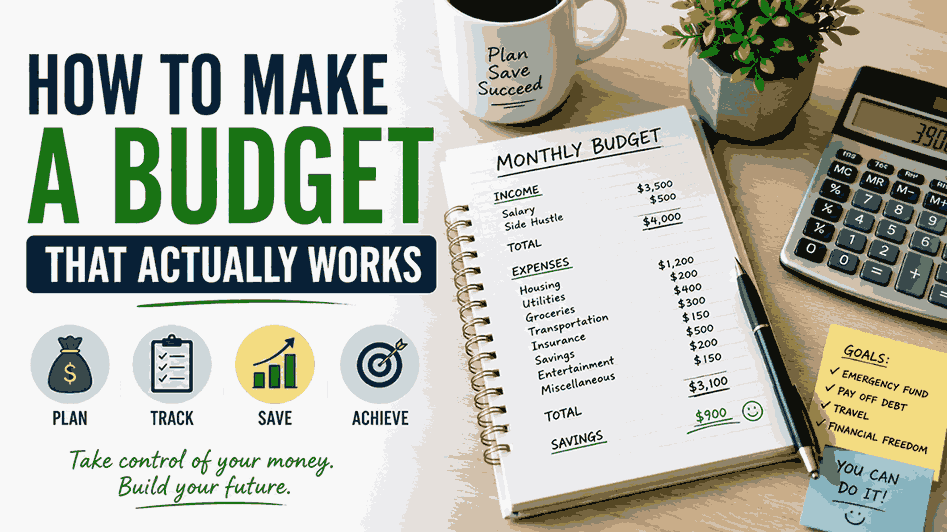
Knowing how to manage your money should not be overwhelming. An effective budget assigns a job to every dollar. It puts you in the driving seat, rather than scratching your head wondering where your cash all went by the end of the month.
Many perceive budgeting as eliminating all the joy from life.
That is not true.
A budget is only a plan for your money. It empowers you to spend and save for the future all in one.
Do not fret if you have been challenged by budgeting in the past. The point is to develop a diet based on your routine.
This guide is going to teach you how to create a budget that works and stick with it for the long haul.
What Is a Budget?
Budget – A budget is a plan for your money and are based on what you earn, spend, and save a certain amount of money.
It is not guessing where your money goes, you decide ahead of time with intent before spending it.
A budget can help you:
- Save more money
- Avoid unnecessary debt
- Pay bills on time
- Prepare for emergencies
- Reach financial goals faster
- Reduce money related stress
Why Budgeting Is Important?
When you don’t have a budget, it is really easy to waste money.
We could easily dismiss a small purchase here and there, but they do quickly accumulate. Budgeting allows you to look at the whole picture.
It also helps you:
i. Maintain Control Over Your Finances
You are aware of where exactly your money is going each month.
ii. Reach Financial Goals Faster
If you want to buy a home, go traveling or build an emergency fund, budgeting will keep you on track.
iii. Reduce Financial Stress
It helps your suit to know that the bills are paid.
ALSO READ: How Banks Make Money: A Simple Guide to Understanding the Banking Business

Step 1. Calculate Your Monthly Income
Know your monthly income
Include income from:
- Salary
- Freelance work
- Business income
- Investments
- Side hustles
If you have varying earnings in a month, include your average monthly wages.
Step 2. List All Your Monthly Expenses
Write down every expense.
Start with fixed expenses.
Fixed Expenses
Those tend to be consistent month after month.
Examples include:
- Rent or mortgage
- Internet
- Insurance
- Loan payments
- School fees
Variable Expenses
These change every month.
Examples include:
- Groceries
- Fuel
- Entertainment
- Shopping
- Dining out
The two types serve up the full picture.
Step 3. Track Your Spending
Folks also tend to spend more than they know.
Keep a record of every transaction for a minimum of one month.
You can use:
- A notebook
- A spreadsheet
- A budgeting app
Tracking helps identify unnecessary spending.
Step 4. Set Financial Goals
If you have clear goals a budget is more effective.
Short Term Goals
These typically require less than a year.
Examples include:
- Saving for a vacation
- Paying off a credit card
- Buying a laptop
Long Term Goals
These may take several years.
Examples include:
- Buying a house
- Retirement savings
- Starting a business
Going through the process of setting your targets will motivate you.
Step 5. Choose a Budgeting Method
No budget system is completely perfect.
You know, just pick any one that suits you the most.
The 50 30 20 Budget
This is one of the most frequent methods.
Allocate approximately 50 percent to needs.
Allocate about 30% to desires.
Save or invest 20 percent.
Zero Based Budget
Assign every dollar a particular task.
Income minus expenses should equal zero.
Envelope Budget
Put actual cash in envelopes (eg food envelope, car repair envelope)
When an envelope is through, it means stop spending in that category.
Step 6. Reduce Unnecessary Spending
Identify the things that generate small amounts of value associated with an expense.
Small adjustment can help you save more money.
You can:
- Cancel unused subscriptions
- Eat at home more often
- Shop with a grocery list
- Compare prices before buying
- Avoid impulse purchases
Small improvements over time add up to major results.
Step 7. Build an Emergency Fund
Unexpected expenses happen.
Your car may need repairs.
A medical bill may appear.
Your emergency fund is a help to maintaining your budget in the event of surprises.
Try to save atleast three to six months of living expenses.
If this need calls for it, start small.
Step 8. Automate Your Savings
Automation makes it easier to save.
Organize the transfer to your savings account on every pay day.
It also avoids the temptation to indulge into spend first.
Step 9. Review Your Budget Every Month
Life changes.
Your budget should change too.
Check your budget at the close of each month.
Ask yourself:
- Stuck to my budget?
- Which expenses increased?
- Where can I improve?
- Did I save my money like I set out to do?
Regular reviews keep your budget effective.
4 Major Mistakes People Make While Budgeting
Most of the time, people lose because they just made stupid mistakes.
1. Setting Unrealistic Limits
A budget should be realistic.
If it seems out of reach, you wont chase after it.
2. Forgetting Unexpected Expenses
Include funds for repairs, gifts and medical bills.
All that unexpected expenses is standard life.
3. Not Tracking Spending
If you do not measure it, you cannot improve it.
Track your expenses consistently.
4. Giving Up Too Soon
Budgeting takes practice.
Give it more than one challenging month before giving up on it.
ALSO READ: Income Producing Assets: 25 Best Investments to Build Passive Income

Tips to Stick to Your Budget
Good habits make writing a budget easier.
1. Keep Your Goals Visible
If there is a goal you want to achieve write it on paper where you can see it everyday.
2. Celebrate Small Wins
Treat yourself once your savings within the per-cent reach milestones!
Keep the rewards affordable.
3. Do Not Compare Yourself To Others
Everyone has different financial situations.
Focus on your own progress.
4. Review Your Progress Weekly
This swift weekly probe keeps you from spending too much before the month is over.
5. Use Best Budgeting Tools
You do not require any expensive software.
Countless people successfully use some very simple tools to help them budget.
Popular options include:
- Google Sheets
- Microsoft Excel
- Budget planners
- Mobile budgeting apps
- Paper notebooks
Pick what suits you when using it.
Frequently Asked Questions
Track your sources of income, log your expenses, save for goals and give every dollar a name.
Most of the experts suggest to keep aside 20 percent of your income. If this sounds hard, start small and bump it up slowly.
Review your budget every month.
A weekly check can ensure that you are also on track.
Yes. Either use your average monthly income, or create a budget based on the lowest amount of money you expect to earn in a month.
Final Thoughts
One of the best financial skills you can ever learn is how to budget. A budget makes a slave to no money, but rather there is money under control your right decision making.
Keep your budget simple. Be realistic with your spending. Save consistently. Review your progress every month.
Tip 1: Keep in mind that no budget is perfect from the get-go. You will adjust as your income, expenses, and goals change.
Your most complicated budget will be your least successful one. They are the ones who you can follow month to month. The time to start is now, be consistent and watch your faith in finances blossom.