
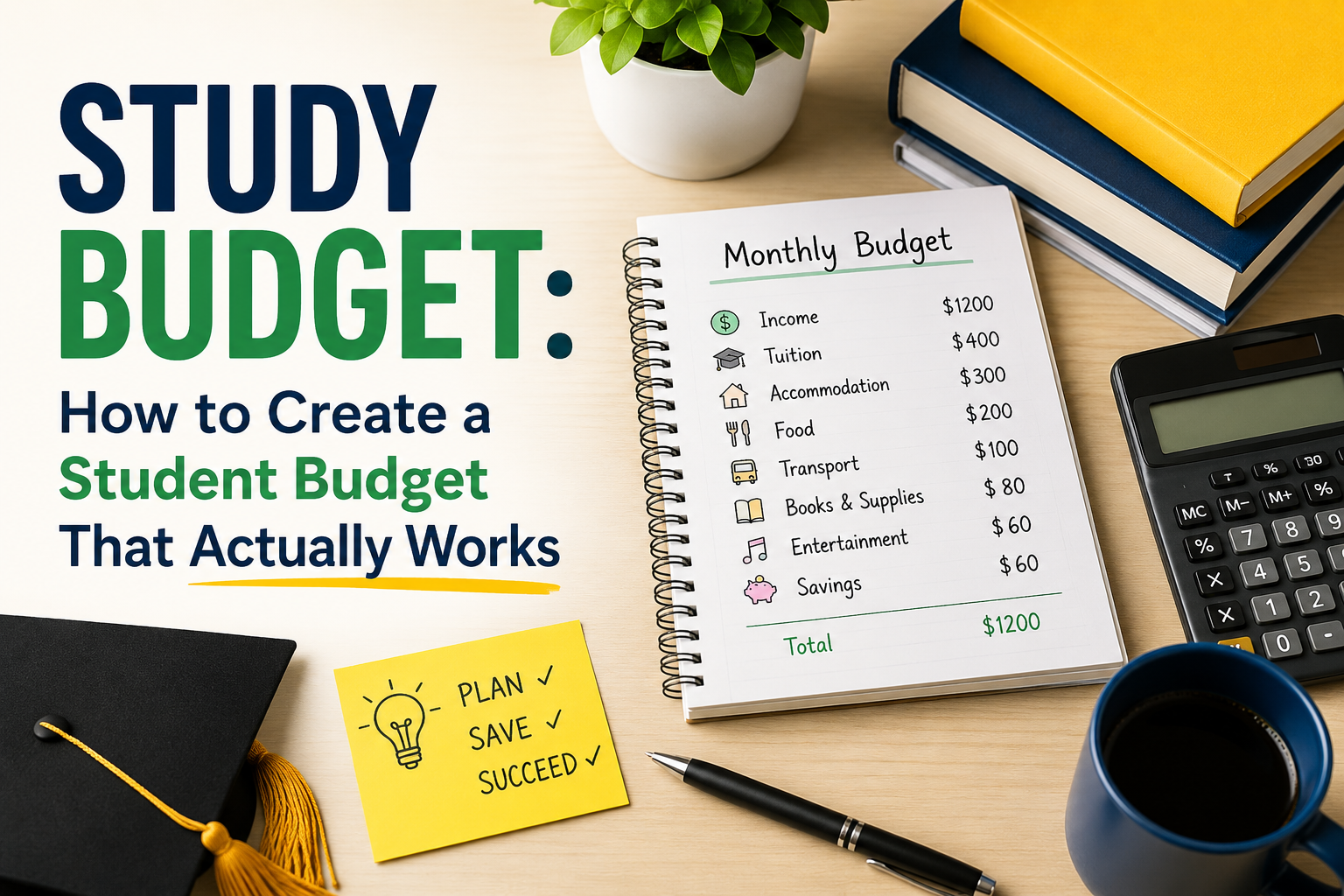
College is exciting. New friends, new classes, new freedom. But that freedom comes with a real challenge. You have to manage your own money for the first time.
Most students never learned how to budget. Nobody sat them down and explained it. So they spend too fast, run out of cash before the month ends, and stress about money instead of focusing on school.
The good news? Building a college budget is not complicated. You just need a simple system and the willingness to stick to it.
This guide walks you through exactly how to do it.
Why a College Budget Actually Matters?
You might think budgeting is for adults with full-time jobs. It is not. It is actually more important when your income is small and unpredictable.
In college, money can come from multiple places. Scholarships, part-time jobs, family support, or student loans. If you do not track where it all goes, it disappears faster than you expect.
A budget gives you control. It tells your money where to go before it slips through your fingers.
Students who budget are also less stressed. A 2023 study by Sallie Mae found that students who actively managed their finances felt more confident and less anxious about money. That alone is worth the effort.
ALSO READ: How Does a Checking Account Work?

Step 1: Know Your Monthly Income
Before you can budget anything, you need to know how much money you actually have coming in each month.
Sit down and write out every income source. Be honest and specific.
Here are common income sources for college students:
i. Financial aid or scholarships — Divide your total award by the number of months in the semester. That gives you a monthly figure to work with.
ii. Family support — If your parents send money each month, count it. Even if it varies, use a conservative average.
iii. Part-time job — Look at your average monthly take-home pay after taxes.
iv. Freelance or gig work — This is harder to predict. Use the lowest amount you typically earn in a slow month.
Add all of these together. That total is your monthly income. This is your starting point.
What If Your Income Changes Each Month?
Some months will be better than others. To stay safe, always budget based on your lowest expected income. When a good month comes and you earn more, save the extra or use it for something planned.
Step 2: List All Your Monthly Expenses
Now write down everything you spend money on. Do not skip anything, no matter how small.
Expenses usually fall into two categories. Fixed expenses stay the same every month. Variable expenses change.
Fixed expenses include:
- Rent or dorm fees
- Phone bill
- Subscriptions (streaming, apps, gym)
- Loan payments if you have any
Variable expenses include:
- Groceries
- Eating out or coffee
- Transportation (bus pass, gas, rideshare)
- Clothing and personal care
- Entertainment and social activities
- School supplies and textbooks
Go through your last two or three months of bank or card statements. That will show you what you are really spending, not what you think you are spending. The numbers might surprise you.
Step 3: Separate Your Needs From Your Wants
This step is where most students struggle. And it is also where the biggest changes happen.
Needs are things you cannot live without. Rent, food, utilities, transportation to class, and basic school supplies. These come first.
Wants are things that make life more enjoyable but are not essential. Eating out every day, new clothes, late night food deliveries, and extra streaming services fall into this category.
That does not mean you can never spend on wants. It just means needs get funded first. Whatever is left can go toward wants in a controlled way.
A Simple Rule to Follow
Try the 50/30/20 rule. Put 50% of your income toward needs. Put 30% toward wants. Save the remaining 20%.
For a student earning $800 a month, that would look like this:
- $400 for needs
- $240 for wants
- $160 for savings
Adjust the percentages if your rent is especially high or your income is very limited. The key is to have a plan rather than spending without thinking.
Step 4: Build Your Budget
Now put it all together.
Take your monthly income. Subtract your fixed expenses first. Then subtract your estimated variable expenses. Whatever is left is what you have for discretionary spending and saving.
If the number is positive, great. You have breathing room. If it is negative, you need to cut something.
Here is an example for a student earning $900 per month:
| Category | Monthly Amount |
|---|---|
| Income | $900 |
| Rent (shared) | $300 |
| Groceries | $150 |
| Phone bill | $40 |
| Transportation | $50 |
| School supplies | $30 |
| Eating out | $80 |
| Entertainment | $50 |
| Savings | $100 |
| Total Expenses | $800 |
| Remaining | $100 |
This student has $100 left over after everything. That can go to an emergency fund or carry over to next month.
Step 5: Track Your Spending All Month Long
A budget is useless if you make it and forget about it. You have to track your spending as you go.
There are a few easy ways to do this.
Use a free budgeting app. Apps like Mint, YNAB, or even your bank’s built-in tracker make this very easy. You link your account and the app categorizes spending for you automatically.
Use a simple spreadsheet. If you prefer something you control, a Google Sheets template works perfectly. Create columns for category, budgeted amount, and actual amount. Update it weekly.
Use the envelope method. This is a cash-based approach. Put physical cash into labeled envelopes for each spending category. When the envelope is empty, stop spending in that category.
Pick the method that fits your style. The best system is the one you will actually use.
Step 6: Cut Costs Without Feeling Miserable
Budgeting does not mean living like a monk. It means being intentional. There are plenty of ways to spend less without giving up everything you enjoy.
i. Food
Cooking at home is the single biggest way to save money in college. Even simple meals like pasta, rice and beans, or eggs cost a fraction of eating out.
Meal prep on Sundays so you always have food ready. Buy store-brand items instead of name brands. Use your school’s dining hall if a meal plan is included.
ii. Textbooks
Never buy a new textbook if you can avoid it. Rent them from sites like Chegg or VitalSource. Check the school library first. Buy used copies on Amazon or Facebook Marketplace. Sometimes a PDF version is available for free through your campus library system.
iii. Transportation
If you live near campus, walking or biking saves a lot. Many schools offer free or discounted bus passes to students. Carpooling with classmates is another easy option.
iv. Entertainment
Your college campus is full of free events. Concerts, movie nights, sports games, and club activities are often free with a student ID. Take advantage of them.

Step 7: Build a Small Emergency Fund
Life happens. Your phone screen cracks. You get sick and need medicine. Your car has a flat tire.
Without an emergency fund, you put these costs on a credit card or borrow money. That leads to debt.
Aim to save at least $300 to $500 as a starting emergency buffer. It does not have to happen overnight. Even saving $25 to $50 a month adds up.
Once you hit that goal, keep building it. Three to six months of expenses is the long-term target. For now, just start somewhere.
Common College Budget Mistakes to Avoid
Even students with good intentions make these mistakes. Knowing them in advance helps you skip right past them.
i. Forgetting irregular expenses. Birthday gifts, holiday travel, and semester fees do not happen every month, but they are real costs. Estimate them annually and divide by 12 to include them monthly.
ii. Not adjusting the budget. Your life changes. Your income might go up. A new expense might show up. Revisit your budget every month and update it.
iii. Using credit cards as extra income. A credit card is not free money. If you use one, pay the full balance every month. Carrying a balance means paying interest, and that makes everything cost more.
iv. Setting unrealistic limits. If you love coffee and set a $5 monthly coffee budget, you will fail immediately. Be honest with yourself and set limits you can actually follow.
ALSO READ: Improve Credit Score: Is a 900 Credit Score Possible?
Final Thoughts
Creating a college budget is one of the best financial habits you can build. It protects you from stress, debt, and running out of money at the worst time.
You do not need to be perfect. You just need to start. Make your first budget this week, track it for a month, and adjust from there.
The students who learn to manage money in college are the ones who graduate with less debt, more savings, and a huge head start on adult financial life.
That can be you. Start today.