
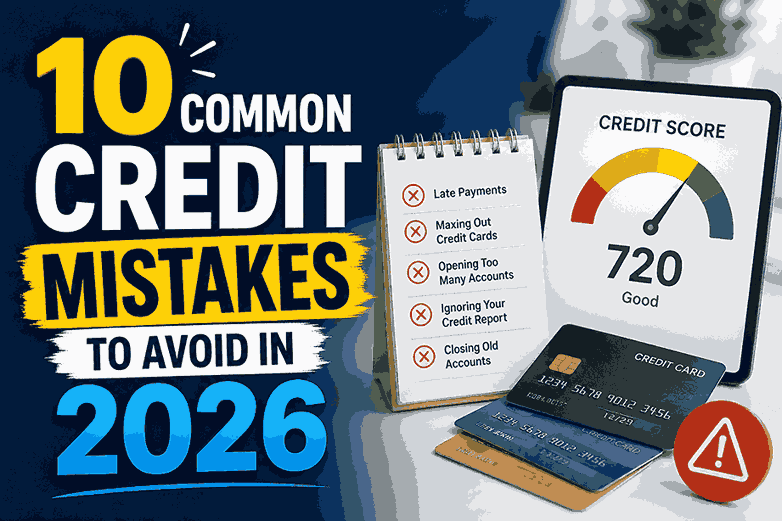
Your credit score affects more than loan approvals. It impacts your rent applications, insurance rates, and even some job offers. Yet many young adults make avoidable mistakes that hurt their score for years.
The good news is that credit mistakes are easy to fix once you spot them. This guide breaks down the ten most common credit mistakes people make in 2026. You will also learn simple steps to correct each one.
Why Credit Mistakes Matter More in 2026?
Lenders are using stricter algorithms this year. Many banks now rely on real time data instead of monthly snapshots. This means your habits show up faster than before.
A single late payment can lower your score within days. On the flip side, smart habits can boost your score just as quickly. Understanding these mistakes gives you an edge.
1. Missing Payment Due Dates
The Problem
Payment history makes up the largest part of your credit score. Even one missed payment can cause a noticeable drop. Many people forget due dates simply because they juggle too many bills.
The Fix
Set up autopay for at least the minimum payment. Add calendar reminders three days before each due date. This buffer gives you time to fix any account issues before the deadline.
ALSO READ: How to Choose the Right Financial Institution for Your Money?
2. Maxing Out Credit Cards
The Problem
Credit utilization is the percentage of your credit limit that you are using. High utilization signals risk to lenders. Many young adults max out cards during emergencies or big purchases.
The Fix
Try to keep utilization below 30 percent. For the best results, aim for under 10 percent. If you need to make a large purchase, consider paying it off before the statement closes.
3. Closing Old Credit Accounts
The Problem
Many people close their first credit card once they get a better one. This feels responsible, but it can backfire. Closing old accounts shortens your credit history and lowers your total available credit.
The Fix
Keep old accounts open, even if you rarely use them. Make a small purchase every few months to keep the account active. This habit protects your credit age and your utilization ratio.
4. Applying for Too Many Cards at Once
The Problem
Each credit application triggers a hard inquiry. Multiple inquiries in a short time can suggest financial stress to lenders. This is especially risky if you are also applying for a mortgage or auto loan.
The Fix
Space out credit applications by several months. Research card benefits ahead of time. Only apply when you are confident you will be approved.
5. Ignoring Your Credit Report
The Problem
Errors on credit reports are more common than most people think. A wrong account or incorrect balance can drag your score down without you knowing.
The Fix
Check your credit report at least twice a year. You can get free reports through AnnualCreditReport.com. Dispute any errors you find right away.
6. Only Paying the Minimum
The Problem
Paying just the minimum keeps your account in good standing. But it also means you carry a high balance for longer. This increases your utilization and the interest you pay overall.
The Fix
Pay more than the minimum whenever possible. Even an extra fifty dollars a month can make a big difference over time. This habit also helps you pay off debt faster.
7. Cosigning Loans Without a Plan
The Problem
Cosigning helps a friend or family member qualify for a loan. But it also ties your credit to their payment habits. If they miss a payment, your score takes the hit too.
The Fix
Only cosign if you trust the person completely. Set clear expectations about payments in writing. Check the account regularly to catch problems early.
8. Not Diversifying Credit Types
The Problem
Lenders like to see a mix of credit types. This includes credit cards, auto loans, and sometimes student loans. Relying only on one type can limit your score growth.
The Fix
You do not need to take on debt you cannot afford. But if the opportunity arises naturally, such as a car loan, consider how it adds variety to your credit profile.
9. Letting Credit Utilization Spike Before Big Applications
The Problem
Many people do not realize that utilization is reported monthly. If you spend heavily right before applying for a mortgage or car loan, your score may drop at the worst time.
The Fix
Pay down balances at least one full billing cycle before a major application. This gives your utilization time to reflect the lower balance.
10. Avoiding Credit Altogether
The Problem
Some young adults avoid credit cards entirely out of fear of debt. While this avoids interest charges, it also means no credit history is built. Lenders cannot evaluate what does not exist.
The Fix
Consider starting with a secured credit card or a credit builder loan. Use it for small purchases and pay it off in full each month. This builds your history safely.
How These Mistakes Affect Your Financial Future?
A strong credit score opens doors. It can lower your interest rates on loans. It can also help you qualify for better apartments and lower insurance premiums.
Avoiding these ten mistakes puts you ahead of most people your age. Good credit habits compound over time, just like good investing habits.
Quick Checklist for Better Credit in 2026
Use this simple checklist to track your progress.
Set up autopay for every account. Check your credit utilization weekly. Review your credit report twice a year. Avoid unnecessary new applications. Pay more than the minimum when you can.
ALSO READ: Study Budget: How to Create a College Budget?
Final Thoughts
Building strong credit does not require complicated strategies. It requires consistency and awareness. Avoiding these common mistakes will help you build a solid foundation for years to come.
Start with one habit this month. Small changes add up fast when it comes to credit.