
Most budgets fail not because people do not care about money. They fail because there is no clear boundary between categories.
You tell yourself you will only spend $200 on groceries. But then you swipe your card here and there. And by the end of the month, you have no idea where the money went.
Envelope budgeting fixes that problem. It is one of the oldest and most effective budgeting methods in personal finance. And it works especially well for beginners.
This guide explains exactly how envelope budgeting works, how to set it up, and whether it is right for you.
What Is Envelope Budgeting?
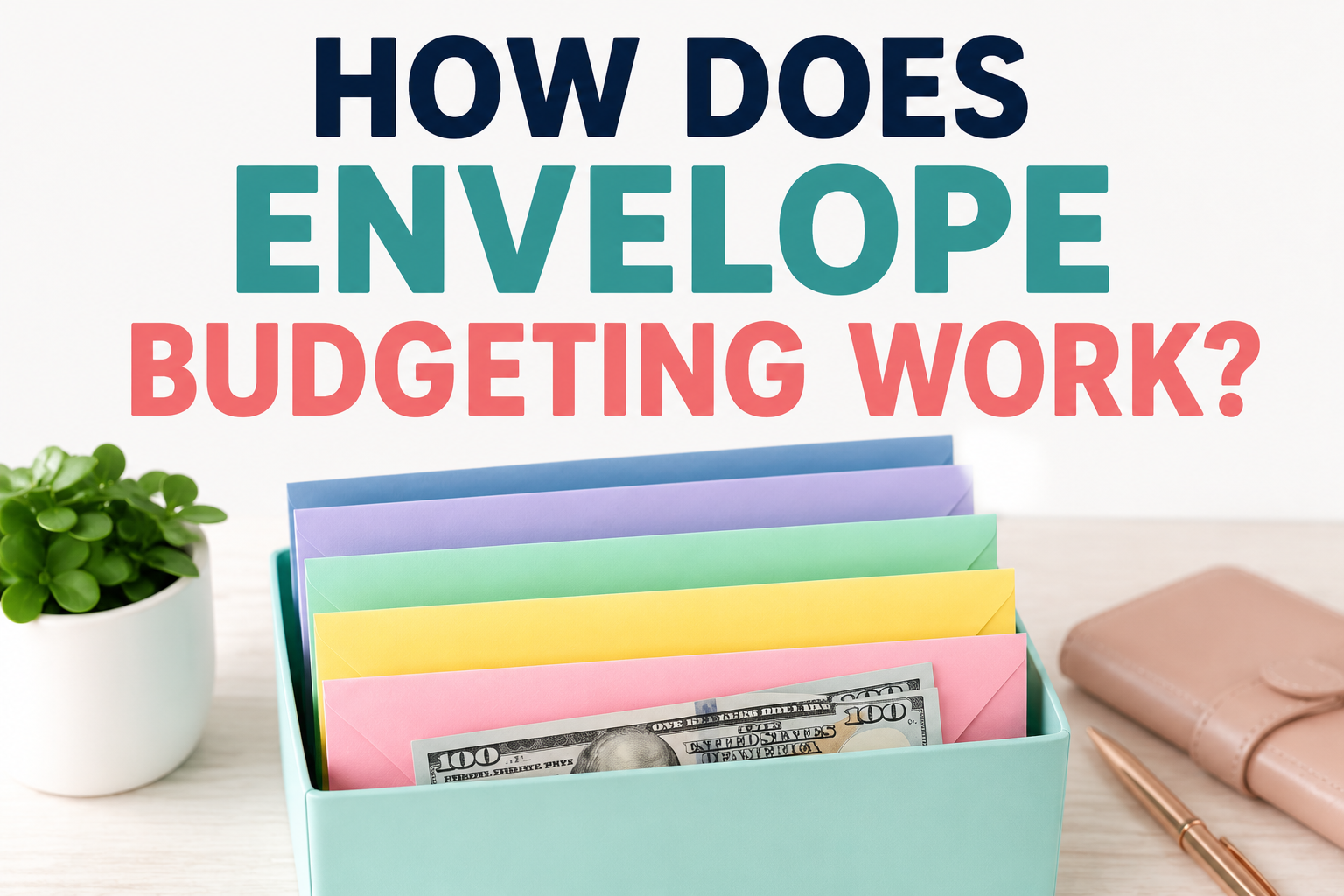
Envelope budgeting is a system where you divide your money into separate spending categories. Each category gets its own envelope. You put a set amount of cash in each envelope at the start of the month. When the envelope is empty, you stop spending in that category.
That is it. Simple but powerful.
The physical cash makes your spending real and visible. You cannot pretend you did not overspend when the envelope is sitting empty in front of you.
ALSO READ: What Are the Main Differences Between Saving and Investing?
Where Did Envelope Budgeting Come From?
This method has been around for decades. Long before budgeting apps existed, families used actual paper envelopes to manage their household money.
Financial teacher Dave Ramsey popularized the envelope system in modern times. He made it a core part of his Total Money Makeover program. Millions of people have used it to get out of debt and take control of their finances.
Today the method has evolved. You can use physical envelopes with cash. Or you can use digital versions through budgeting apps. The core idea stays the same either way.
How Does Envelope Budgeting Work Step by Step
Step 1: Know Your Monthly Income
Before you create a single envelope, you need to know exactly how much money you bring in each month.
Add up your take-home pay. Include any side income or freelance earnings. Use the amount that actually hits your bank account, not your gross salary.
This is your starting number. Every envelope you create will come out of this total.
Step 2: List Your Spending Categories
Write down every area where you spend money during the month.
Common categories include groceries, rent or mortgage, utilities, transportation, eating out, entertainment, clothing, personal care, and savings.
Be specific. The more clearly you define your categories, the easier it is to stick to them.
Step 3: Assign a Dollar Amount to Each Envelope
Now give each category a spending limit.
Look at your past bank or card statements. See what you have actually been spending in each category. Use those numbers as a guide.
Make sure your total envelope amounts do not exceed your monthly income. If they do, cut back somewhere.
Step 4: Fill Your Envelopes
If you are using the physical cash method, go to the bank or ATM and withdraw the total amount. Then sort the cash into each labeled envelope.
If you are going digital, transfer the amounts into separate budget categories in your app or spreadsheet.
Step 5: Spend Only From the Right Envelope
When you go grocery shopping, take only the grocery envelope. When you go out to eat, use the dining envelope.
This single rule is what makes the system work. Every purchase comes from its assigned category. No mixing. No borrowing from another envelope without a conscious decision.
Step 6: Stop When an Envelope Is Empty
This is the hard part. And it is also the most important part.
When the grocery envelope runs out before the end of the month, you do not just swipe your card. You either wait until next month, shop smarter with what you have, or make a conscious choice to move money from another envelope.
That moment of stopping and thinking is what changes spending habits over time.
Physical Cash vs Digital Envelopes
You have two main ways to run this system. Both work. The right choice depends on your lifestyle.
Physical Cash Envelopes
This is the original method. You use actual cash in real envelopes.
Why it works well: Spending cash feels more real than swiping a card. Studies show people spend less when they pay with physical money. There is a psychological impact when you hand over bills.
The downside: Carrying a lot of cash around is not always practical. It can also feel unsafe in some situations. And online purchases are harder to manage with cash.
Digital Envelope Budgeting
Apps like YNAB (You Need a Budget), Goodbudget, and EveryDollar let you create virtual envelopes. You assign your income to categories digitally. The app tracks your spending and shows you what is left in each envelope.
Why it works well: You do not need to carry cash. It works for card and online purchases. And you can access your budget from your phone anywhere.
The downside: It requires more discipline. There is no physical envelope going empty in front of you. You have to check the app intentionally and hold yourself accountable.
What Categories Should You Include?
Your envelopes should cover every area where you regularly spend money. Here is a starter list for beginners.
Fixed Expenses These are the same every month. Rent, loan payments, insurance premiums, and subscriptions fall here. These envelopes are easy to fill because the amounts do not change.
Variable Necessities These change month to month but are still essential. Groceries, utilities, fuel, and transportation costs go here. Look at your past few months to find a reasonable average.
Lifestyle and Fun This is where most overspending happens. Restaurants, coffee shops, movies, shopping, and hobbies belong here. Give yourself a real and honest budget. Cutting this to zero never works.
Savings and Goals Many beginners forget to make savings an envelope. Treat it like any other spending category. Set aside money for your emergency fund, vacation fund, or any financial goal you are working toward.
Irregular Expenses Things like car maintenance, medical bills, and annual subscriptions do not happen every month. But they will happen. Create a small envelope for these and contribute to it monthly so you are never caught off guard.
The Psychology Behind Why Envelope Budgeting Works?
Most budgeting methods fail because they are abstract. You set a number in a spreadsheet and forget about it.
Envelope budgeting works because it is tangible. The money is visible. The limits are physical.
When you reach into your grocery envelope and see only $30 left, you feel it. That feeling changes your decisions at the checkout line in a way that a spreadsheet number never could.
There is also something called the pain of paying. Research in behavioral economics shows that spending cash activates a part of the brain associated with loss. Digital payments numb that feeling. Cash brings it back.
That small moment of awareness, repeated hundreds of times over months, slowly rewires how you think about money.
Common Mistakes to Avoid
i. Robbing One Envelope to Fill Another Too Often
Moving money between envelopes occasionally is fine. Life is unpredictable. But if you are constantly pulling from savings to cover dining out, that is a signal your budget is not realistic.
Revisit your numbers. Adjust the allocations so they actually match your life.
ii. Creating Too Many Categories
Some people start with 20 or 30 categories. It gets overwhelming fast. Start simple. Use 6 to 10 categories. You can always add more once the habit is built.
iii. Not Reviewing Your Budget Monthly
Your income and expenses change. Review your envelopes at the start of each month. Adjust where needed. A budget that worked in January may need tweaking by March.
iv. Giving Up After One Bad Month
You will overspend somewhere in your first month. Everyone does. That is not failure. That is information. It tells you where your original estimates were off.
Adjust and keep going.
Is Envelope Budgeting Right for You?
Envelope budgeting works best for people who struggle with overspending in specific categories. It also works well for anyone who wants a simple and visual way to manage money.
It is especially helpful if you are paying off debt, building an emergency fund, or just starting to budget for the first time.
It may feel too rigid for people with irregular income. Freelancers and commission-based earners may need to adjust the system. Instead of filling envelopes at the start of the month, fill them as income arrives.
How to Start Today?
You do not need to wait for the first of the month. You can start right now with whatever money you have.
Grab a pen and paper. Write down your spending categories. Estimate how much you want to spend in each one for the rest of this month. Pull that cash out or set up digital categories in a free app like Goodbudget.
Then stick to it for 30 days. Just one month. See what happens.
Most people are surprised by two things. How much they were overspending without realizing it. And how freeing it feels to have a clear plan.
ALSO READ: High Yield Investments: 12 Best Options to Grow Your Money in 2026
Final Thoughts
Envelope budgeting is not complicated. That is exactly why it works.
You decide in advance where your money goes. You give every category a limit. And you respect that limit when the time comes to spend.
It will not solve every financial problem overnight. But it will give you something most people never have: a clear picture of where your money is actually going.
Start simple. Stay consistent. And let the envelopes do the work.