
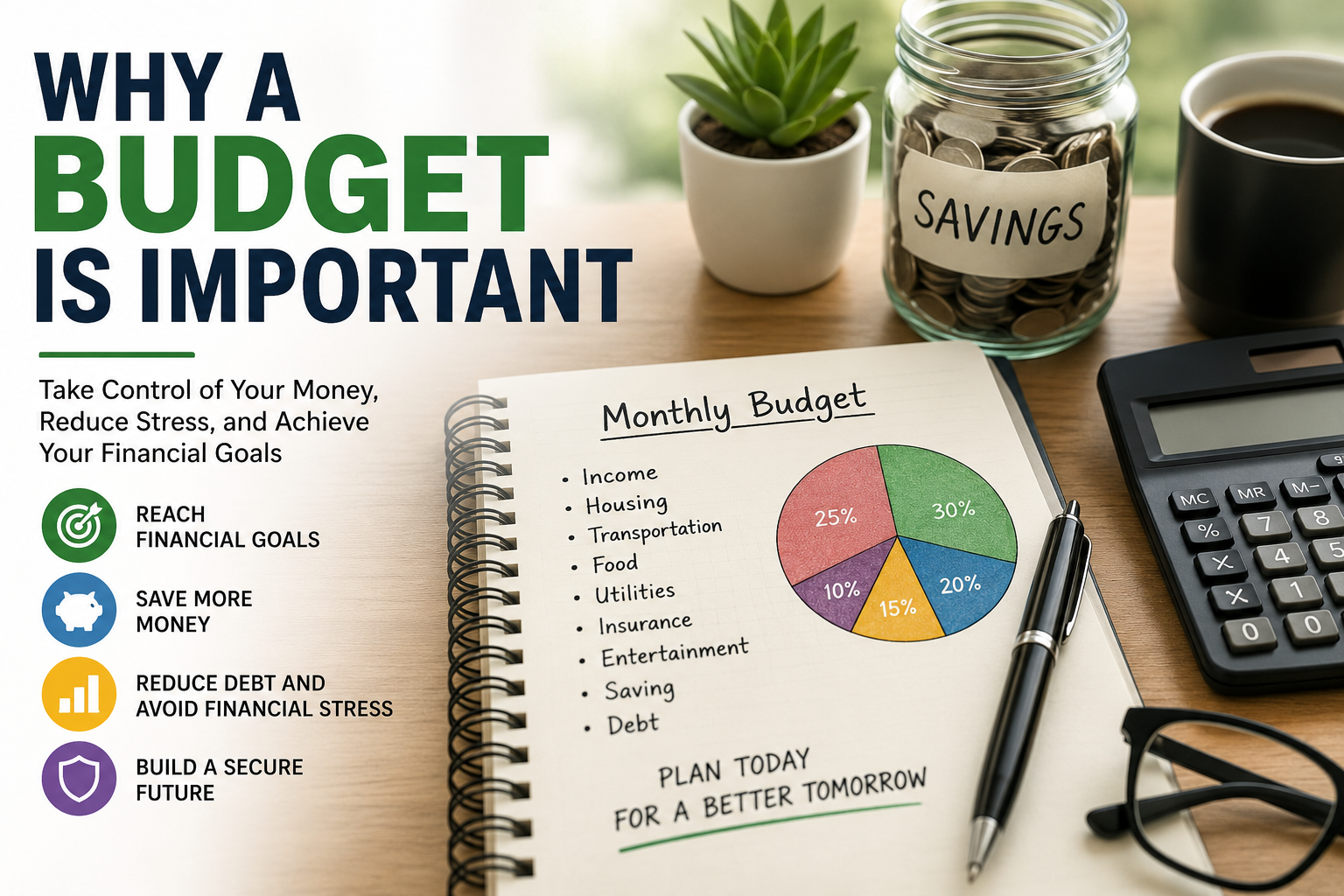
Money affects almost every part of our lives. Whether you’re paying bills, saving for a dream vacation, investing for the future, or simply trying to make it through the month, how you manage your money matters. One of the most effective tools for managing money is a budget.
Many people hear the word “budget” and immediately think about restrictions, sacrifices, and saying no to everything they enjoy. In reality, a budget is not about limiting your life. It’s about giving yourself control over your money so your money doesn’t control you.
In this article, we’ll explore why a budget is important, how it can improve your financial health, and practical tips to create a budget that actually works.
What Is a Budget?
A budget is simply a plan for your money. It helps you track how much money comes in and how much goes out during a specific period, usually a month.
A budget allows you to:
- Monitor your income
- Track your expenses
- Save money consistently
- Avoid overspending
- Reach financial goals faster
Think of a budget as a roadmap. If you were going on a long road trip, you wouldn’t start driving without directions. Your finances work the same way. A budget helps guide your money where you want it to go.
ALSO READ: Budgeting for College Students: The Complete Guide to Managing Money in 2026

Why a Budget Is Important?
There are many reasons why budgeting is one of the most powerful financial habits you can develop.
1. Helps You Understand Where Your Money Goes
One of the biggest financial mistakes people make is not knowing where their money goes each month.
You may earn a decent income but still feel broke before payday. Without a budget, small expenses can quietly add up.
For example:
- Daily coffee purchases
- Food delivery orders
- Online subscriptions
- Impulse shopping
A budget shines a light on your spending habits and helps you identify areas where money may be slipping away unnoticed.
2. Prevents Overspending
It’s easy to spend more than you intended when you don’t have a plan.
A budget creates spending limits for different categories such as:
- Housing
- Transportation
- Food
- Entertainment
- Shopping
When you know how much you’ve allocated for each category, you’re less likely to overspend and end up struggling later in the month.
3. Reduces Financial Stress
Money is one of the leading causes of stress for many people.
Worrying about bills, debt, or unexpected expenses can take a toll on your mental health.
Having a budget helps reduce anxiety because you know:
- What bills are due
- How much money you have available
- What you can afford
- How much you’re saving
Financial clarity creates peace of mind.
4. Helps You Build an Emergency Fund
Life is unpredictable.
Unexpected expenses can happen at any time, including:
- Car repairs
- Medical bills
- Home maintenance
- Job loss
Without savings, these situations can force people into debt.
A budget helps you set aside money regularly for emergencies, creating a financial safety net when life throws surprises your way.
A Budget Helps You Reach Financial Goals
Most people have financial goals.
Some common examples include:
- Buying a house
- Starting a business
- Traveling
- Paying off debt
- Investing for retirement
- Building wealth
The problem is that goals without a plan often remain dreams.
Turning Goals Into Reality
A budget helps break large goals into smaller, manageable steps.
For example, if you want to save $6,000 in a year, your budget can help you set aside $500 each month.
Instead of wondering whether you’ll have enough money, you’ll know exactly how much progress you’re making.
Budgeting Helps You Avoid Debt
Debt can quickly become a financial burden.
Credit cards, personal loans, and buy-now-pay-later services make spending easy but can create long-term problems if not managed carefully.
A budget helps you:
- Spend within your means
- Avoid unnecessary borrowing
- Pay off existing debt faster
Paying Off Debt More Efficiently
When you budget, you can allocate extra money toward debt repayment.
Whether you’re using the snowball method or avalanche method, budgeting helps ensure that debt reduction becomes a priority instead of an afterthought.
Improves Your Saving Habits
Saving money is much easier when it’s built into your budget.
Many people save whatever is left over at the end of the month.
Unfortunately, there often isn’t much left.
A better approach is to treat savings like a monthly bill.
Pay Yourself First
One of the most effective budgeting principles is “pay yourself first.”
This means:
- Receive your income.
- Move money into savings immediately.
- Use the remaining amount for expenses.
Even small amounts saved consistently can grow significantly over time.
ALSO READ: How to Stop Living Paycheck to Paycheck? 14 Practical Steps

Helps You Prepare for the Future
Financial success isn’t only about today. It’s also about preparing for tomorrow.
A budget helps you plan for future expenses such as:
- Retirement
- Education
- Marriage
- Children
- Home ownership
The earlier you start planning, the easier it becomes to achieve these milestones.
Building Long-Term Wealth
Budgeting creates extra money that can be invested.
Over time, investments in stocks, ETFs, real estate, or businesses can help build wealth and generate passive income.
Without a budget, investing often gets pushed aside because there never seems to be enough money available.
Gives You More Freedom, Not Less
Many people avoid budgeting because they think it limits their freedom.
Ironically, the opposite is true.
A budget gives you permission to spend money on things you enjoy because you’ve already planned for them.
For example, if your budget includes:
- Entertainment
- Dining out
- Travel
- Hobbies
You can spend on those things without guilt because they’re part of your plan.
Budgeting Creates Intentional Spending
The goal isn’t to stop spending.
The goal is to spend intentionally on what matters most to you.
That’s real financial freedom.
Helps Families Work Together
Money disagreements are common among couples and families.
A shared budget improves communication and ensures everyone is working toward the same goals.
Benefits include:
- Greater transparency
- Fewer financial arguments
- Better teamwork
- Shared financial goals
When everyone understands the family’s financial situation, making decisions becomes much easier.
Teaches Financial Discipline
Discipline is one of the most important skills for financial success.
Budgeting encourages positive habits such as:
- Tracking expenses
- Saving regularly
- Avoiding impulse purchases
- Planning ahead
These habits often spill over into other areas of life, improving productivity and goal achievement overall.
Common Budgeting Mistakes to Avoid
Even with the best intentions, budgeting mistakes can happen.
Setting Unrealistic Limits
Creating an overly strict budget often leads to frustration.
Leave room for enjoyment and flexibility.
Forgetting Irregular Expenses
Many people budget for monthly bills but forget expenses such as:
- Vehicle maintenance
- Gifts
- Insurance premiums
- Holidays
Include these in your budget to avoid surprises.
Not Tracking Spending
A budget only works if you follow it.
Regularly review your spending and compare it to your plan.
Giving Up Too Soon
Budgeting is a skill that improves with practice.
If your first budget isn’t perfect, that’s normal. Adjust it and keep going.

Simple Steps to Create a Budget
Creating a budget doesn’t have to be complicated.
Step 1: Calculate Your Income
List all sources of income, including:
- Salary
- Freelance work
- Side hustles
- Investments
Step 2: List Your Expenses
Write down all monthly expenses, such as:
- Rent or mortgage
- Utilities
- Food
- Transportation
- Entertainment
Step 3: Categorize Spending
Group expenses into categories so you can clearly see where your money goes.
Step 4: Set Financial Goals
Decide what you want your money to accomplish.
Examples include:
- Saving $1,000 emergency fund
- Paying off credit card debt
- Investing monthly
Step 5: Review and Adjust
Budgets are not permanent.
Review your budget every month and make changes as your circumstances evolve.
ALSO READ: Income Made Smart: 7 Strategies to Grow Your Money
Final Thoughts
Understanding why a budget is important can completely change your financial future. A budget helps you control spending, reduce stress, avoid debt, save money, and achieve your financial goals faster.
The truth is simple: every dollar needs a purpose. When you create a budget, you’re telling your money exactly where to go instead of wondering where it went.
You don’t need a high income to benefit from budgeting. Whether you’re a student, employee, freelancer, or business owner, budgeting can help you make smarter financial decisions and build a more secure future.
Start today, stay consistent, and remember that every successful financial journey begins with a plan.