
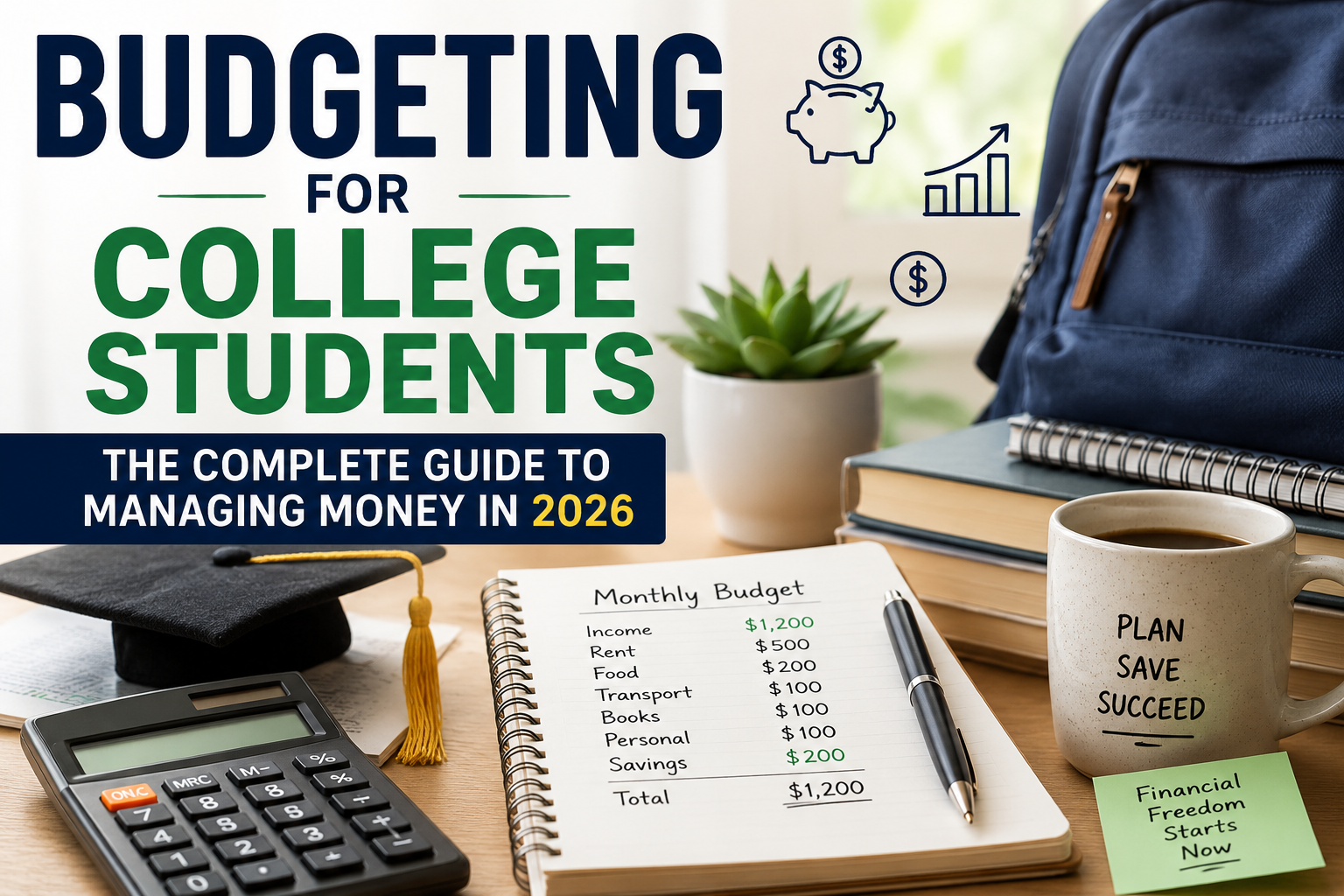
College is an exciting chapter of life. It’s a time to learn new skills, meet new people, and prepare for your future career. But along with the freedom of college life comes a challenge that many students struggle with: managing money.
Between tuition, textbooks, rent, transportation, food, and social activities, expenses can add up quickly. Without a solid plan, it’s easy to overspend and end up stressed about finances.
The good news? Learning how to create and follow a budget can help you stay in control of your money while still enjoying your college experience.
In this complete guide to budgeting for college students in 2026, you’ll learn practical budgeting strategies, money-saving tips, and smart financial habits that can help you avoid debt and build a stronger financial future.
Why Budgeting Matters for College Students
Many students believe budgeting means restricting every dollar and never having fun. In reality, budgeting is simply a plan for your money.
A budget helps you:
- Know where your money goes
- Avoid unnecessary debt
- Save for emergencies
- Reduce financial stress
- Build healthy money habits
- Prepare for life after graduation
When you know exactly how much money you have and how much you can spend, you make better financial decisions and feel more confident about your future.

Understanding Your Income
Before creating a budget, you need to know how much money comes in each month.
Common Sources of Student Income
Your income may come from:
- Part-time jobs
- Freelancing
- Scholarships
- Grants
- Financial aid
- Family support
- Side hustles
- Internship income
Write down all income sources and calculate your average monthly income.
For example:
| Income Source | Monthly Amount |
|---|---|
| Part-Time Job | $600 |
| Scholarship Allowance | $300 |
| Freelance Work | $200 |
| Total Income | $1,100 |
Knowing your total income gives you a realistic starting point for building your budget.
ALSO READ: Best Stocks to Invest in on Cash App in 2026
Track Your Expenses
The next step is understanding where your money goes.
Many students are surprised when they discover how much they spend on coffee, takeout, subscriptions, and entertainment.
Fixed Expenses
These are expenses that stay relatively the same each month:
- Rent
- Tuition payments
- Insurance
- Phone bills
- Internet
Variable Expenses
These change from month to month:
- Groceries
- Dining out
- Transportation
- Entertainment
- Shopping
- Personal expenses
Track your spending for at least 30 days. Use a budgeting app, spreadsheet, or notebook.
You can’t improve what you don’t measure.
Create a Simple Student Budget
Once you know your income and expenses, it’s time to create a budget.
The 50/30/20 Rule for Students
One of the easiest budgeting methods is the 50/30/20 rule.
50% for Needs
Essential expenses such as:
- Rent
- Utilities
- Food
- Transportation
- Tuition
30% for Wants
Non-essential spending such as:
- Streaming services
- Eating out
- Entertainment
- Shopping
- Hobbies
20% for Savings and Debt
Money allocated toward:
- Emergency fund
- Investments
- Debt repayment
- Future goals
If your budget is tight, you may need to adjust these percentages. The goal is to maintain balance while prioritizing essentials.
Build an Emergency Fund
Unexpected expenses happen.
Your laptop might break. You could need medical care. Your car might need repairs.
Without savings, these situations can force you into debt.
How Much Should Students Save?
Start with a small goal:
- First goal: $500
- Second goal: $1,000
- Long-term goal: 3–6 months of expenses
Even saving $10–$20 per week can make a huge difference over time.
Best Budgeting Apps for College Students in 2026
Technology makes budgeting easier than ever.
Popular Budgeting Apps
i. YNAB (You Need A Budget)
Excellent for detailed budgeting and financial planning.
ii. PocketGuard
Helps prevent overspending by showing how much money is available.
iii. Goodbudget
Uses the envelope budgeting system.
iv. Monarch Money
Offers budgeting, tracking, and goal-setting features.
v. Google Sheets
A free option for students who prefer manual budgeting.
Choose the tool you’ll actually use consistently.
Smart Ways to Save Money in College
Saving money doesn’t mean sacrificing your entire social life.
Small changes can create significant savings.
Buy Used Textbooks
Textbooks can be expensive.
Consider:
- Used books
- Digital versions
- Rentals
- Library resources
Cook More Meals
Eating out frequently can destroy a student budget.
Preparing meals at home is usually much cheaper and healthier.
Use Student Discounts
Many companies offer student discounts on:
- Software
- Streaming services
- Transportation
- Clothing
- Electronics
Always ask if a student discount is available.
Share Expenses
Roommates can help reduce:
- Rent
- Utilities
- Internet
- Household supplies
Splitting costs often leads to substantial monthly savings.

Avoid Common Student Budgeting Mistakes
Even students with good intentions can make financial mistakes.
Not Tracking Spending
If you don’t know where your money goes, budgeting becomes nearly impossible.
Relying on Credit Cards
Credit cards can be useful tools, but they can also create debt quickly if not managed carefully.
Only spend what you can afford to pay back immediately.
Ignoring Small Purchases
Daily coffee runs and impulse purchases may seem harmless, but they add up over time.
A $5 daily habit costs over $1,800 per year.
Not Having Financial Goals
Goals help keep you motivated.
Examples include:
- Saving $1,000
- Paying off debt
- Building an emergency fund
- Investing your first $100
How to Make Extra Money While in College
Increasing income can make budgeting much easier.
Freelancing
Skills such as:
- Writing
- Graphic design
- Video editing
- Social media management
- Web development
can generate income online.
Tutoring
Many students earn extra money by helping others with subjects they already understand.
Campus Jobs
On-campus jobs often offer flexible schedules that fit around classes.
Online Side Hustles
Options include:
- Blogging
- YouTube
- Affiliate marketing
- Print-on-demand
- Selling digital products
Even a few hundred extra dollars per month can significantly improve your financial situation.
Start Investing Early
Many students think investing is only for wealthy people.
That’s simply not true.
In 2026, many investment platforms allow you to start with very small amounts of money.
Why Start Early?
The power of compound growth means your money can grow over time.
For example, investing small amounts consistently in your early twenties can potentially lead to much larger results than waiting until your thirties.
Start small and focus on learning.
Budgeting Tips for International Students
International students often face additional financial challenges.
Consider:
- Monitoring exchange rates
- Avoiding unnecessary bank fees
- Creating a larger emergency fund
- Finding student-friendly housing
- Taking advantage of campus resources
Planning ahead can help prevent financial surprises.
Creating Financial Habits That Last Beyond College
College is the perfect time to develop lifelong money habits.
The skills you learn today can benefit you for decades.
Focus on:
- Spending less than you earn
- Saving consistently
- Avoiding unnecessary debt
- Investing regularly
- Tracking expenses
- Setting financial goals
These habits can help you build long-term financial stability and freedom.
ALSO READ: Income Made Smart: 7 Strategies to Grow Your Money
Final Thoughts
Budgeting for college students doesn’t have to be complicated. The key is understanding your income, tracking expenses, and creating a realistic spending plan that works for your lifestyle.
Remember, budgeting isn’t about restricting yourself. It’s about giving every dollar a purpose and making smarter financial decisions.
By building good money habits in college, you’ll reduce stress, avoid debt, and create a strong foundation for your financial future. Whether you’re living on scholarships, working part-time, or managing student loans, a simple budget can help you stay in control and achieve your financial goals in 2026 and beyond.